Stories & guides · · 27UsedCar
Exporting a RAV4 Hybrid: FOB Quotes, Landed Cost and Market-Specific Versions
Explains FOB versus destination cost, the limits of a supplier’s dated quote and how to estimate hybrid fuel savings; distinguishes China-market and other 2026 RAV4 versions using Toyota sources.

Match “2026 model” and “sixth generation” to a market
Globalucar’s September 2026 article uses a China-sourced RAV4 Hybrid to discuss FOB pricing, delivered cost and fuel savings. It is a supplier’s export guide that combines product information with its own stock and sales channel. The first question should not be “what is the price?” but “which market, factory, powertrain and trim does this quote describe?” Model year, destination market and generation are related labels, not interchangeable specifications.
Toyota’s own material identifies the sixth-generation RAV4 in Japan and North America as a 2026 model. FAW Toyota also uses the name “sixth-generation all-new Rongfang” in official China-market material and has published information on its hybrid version. This confirms that a sixth-generation China-market Rongfang exists; it does not establish that every 2026 RAV4 sold around the world has the same specification. Toyota Japan’s lineup includes a hybrid and a plug-in hybrid planned for release, and Toyota’s U.S. lineup also includes HEV and PHEV variants. The Chinese joint-venture version may differ in powertrain, trim names, equipment, software localization and warranty. Confirm the car by its VIN, certificate or registration records, manufacturer, engine and hybrid-system codes, and a written equipment list.
Version differences affect the items buyers care about: front- or all-wheel drive, engine displacement, hybrid architecture and battery type, driver-assistance functions, infotainment language, navigation and phone connectivity, lights, emissions certification, warranty and parts compatibility. Two vehicles can look similar and both carry the RAV4 Hybrid name without sharing parts, warranty recognition or import eligibility. An exporter should identify the exact version and VIN in the contract and attach the specification sheet for that market.
FOB is not the price delivered to your door
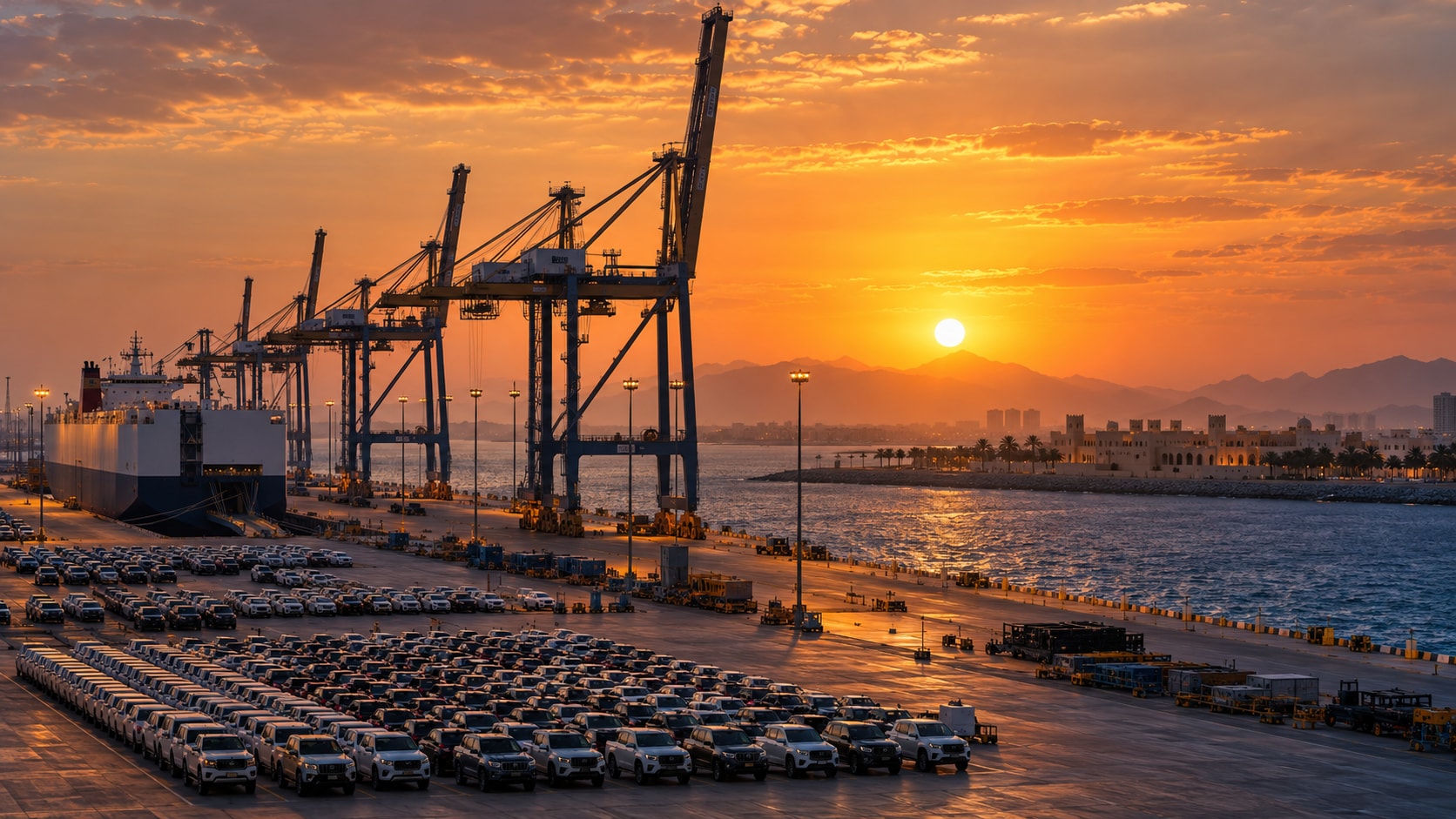
FOB is an Incoterms rule for sea and inland-waterway transport. Under the International Chamber of Commerce’s explanation of Incoterms® 2020, the seller completes delivery when the goods are loaded on board the vessel nominated by the buyer at the named port of shipment. Risk of loss or damage transfers to the buyer at that point. The seller generally handles the agreed export-clearance obligations; the buyer arranges and pays for the main carriage and costs after loading. An FOB quote does not by itself mean marine insurance is included, and it does not include destination import duty, VAT, brokerage, inland delivery or registration.
The contract should also state which version of the trade term applies, the named port and the boundaries of the quoted charges. Cars may travel by roll-on/roll-off vessel, in containers or through multimodal transport. If a vehicle is handed to a terminal carrier before it is on the buyer-nominated ship, FOB may not be the best contractual rule; ICC guidance says FCA is typically worth considering for containerized goods. Do not rely on three letters alone. Ask the seller to allocate export documents, port handling, loading, ocean freight, insurance and destination charges, and name the Incoterms edition in the agreement.
A useful destination budget separates the vehicle price, export and loading charges, ocean freight, insurance, destination-port and broker fees, import taxes, inland delivery, inspection or modifications, and registration. Depending on the transaction, banking costs, storage, demurrage, compliance testing or other items may also arise. The amount and procedure vary by country, port, powertrain, vehicle condition and importer. There is no single “landed price” that applies to every buyer in Nigeria, Kenya, the Middle East and Central Asia.
A supplier’s quote belongs to its stock and its date
Globalucar’s article lists prices for particular vehicles in its inventory and tiered offers for orders through its supply channel. Those are supplier quotes published on a specific date, not Toyota’s suggested retail price, customs valuation or a nationwide FOB market rate. The page does not provide independently auditable transaction records, quote validity, a complete list of included charges or the conditions behind each volume tier. It therefore cannot establish that the same model can generally be bought at that amount, or that a sample-unit price can be multiplied into a long-term fleet budget.
A formal inquiry should request a dated written quotation with a validity period. It should identify vehicle status (new, registered, used or certified used), production date, first-registration date, mileage, exact trim, VIN, quantity tier, loading port, trade term, lead time, payment milestones and cancellation conditions. If a deposit or allocation period is required, verify the seller’s legal entity, authorization or source of the vehicle. The contract should state what happens to the deposit if the vehicle cannot be delivered, an export permit is not granted, the paperwork does not match or inspection fails. Photos, verbal assurances and an online stock page do not replace a vehicle-specific contract and documents.
When comparing suppliers, hold the terms constant: same model year and market version, comparable mileage and condition, same order quantity, port, payment method and delivery window. Otherwise, a lower FOB figure may mean different equipment, excluded terminal charges, a longer wait or a different point at which risk transfers. Treating FOB as the complete cost can make an apparently cheaper option more expensive once freight, duties or local certification are included.
Test fuel savings against your own mileage
A hybrid is not automatically the lower-cost choice just because it uses less fuel. First find the purchase-price difference between the hybrid and a comparable vehicle, then estimate annual distance, city-versus-highway use, local fuel prices and the real-world consumption gap. A simple estimate is: annual fuel saving = annual kilometres ÷ 100 × the difference in litres per 100 km × local price per litre. Multiply the annual saving by the intended ownership period and compare it with the initial price premium.
That calculation is only an estimate. Official test-cycle consumption is measured under standardized conditions; real fuel use changes with temperature, congestion, speed, load, tyres, air-conditioning and driving style. Road quality, fuel quality and service conditions in an export destination may also differ from the test environment. A supplier’s fuel-saving figure, a fleet’s annual mileage or another country’s fuel price is not automatically the buyer’s result. Use local prices and your own routes, and allow for uncertainty rather than treating the estimate as guaranteed savings.
Total ownership cost also includes maintenance, wear items, hybrid-system checks, insurance, financing, import charges, after-sales support and expected resale value. Maintenance needs vary by vehicle and by the capabilities of the local service network. The practical questions are whether trained technicians, diagnostic equipment and parts are available, not whether hybrids are assumed to cost more or less to maintain. Fuel savings matter more for a high-mileage vehicle with frequent urban driving; a low-mileage owner may not recover the purchase premium during the planned holding period.
Check destination rules and service support separately
Import rules in Nigeria, Kenya and neighbouring markets cannot be substituted for one another. Before ordering, confirm vehicle age, left- or right-hand drive, emissions or efficiency standards, certification, taxes, paperwork and local registration requirements with the destination customs, vehicle-standard and registration authorities. A version sold legally in China or Japan is not automatically approved for import elsewhere. A seller’s statement that a vehicle is “exportable” is not the same as an import permit or local approval for the buyer.
Warranty coverage also needs a written answer. Toyota China’s, Japan’s or another market’s warranty may be limited to its original sales region. Ask whether the local distributor will accept the China-market vehicle and get the response in writing. Clarify who can diagnose and repair the hybrid battery and high-voltage system, whether commonly needed parts will remain available, and whether local infotainment services and software updates are supported. If a fault occurs, find out whether the vehicle must be returned to its original market. Put service location, duration, exclusions and claim steps into the contract rather than relying on a general promise of “Toyota reliability.”
Verify each car before payment
Once a VIN is available, request production and registration records, mileage and service history, accident or flood information, export-eligibility papers, an inspection report and the condition of the battery and hybrid system. For a used or certified-used vehicle, an independent inspector should assess the body, underbody, powertrain and electronic fault codes. Ask what “certified” means: who performed the inspection, what it covered, when it was performed and what remedy applies if a material fault is found. Match the VIN on the physical vehicle to every document and confirm that the photographed car is the one in the contract.
Place the FOB price, freight, insurance, port charges, taxes, clearance, inland delivery and registration in one cost sheet, then add likely maintenance and ownership costs. Calculate a fuel-saving payback period using local fuel prices and annual mileage. Test how the result changes if fuel prices, mileage or the consumption gap differs from the estimate. If the claimed advantage exists only under unusually high mileage, ideal fuel prices or an unconfirmed tax assumption, it should not be presented as a certain saving.
Make the vehicle, quote and use case fit together
A sixth-generation RAV4 Hybrid can illustrate how export costs work, but “2026 model” does not mean one global specification, and a supplier’s FOB number applies only to a particular vehicle, port and date. Start by identifying the market version and vehicle itself. Then confirm the Incoterm, destination cost, import eligibility, warranty and service terms, and condition. Finally, estimate fuel savings using local prices and your own mileage instead of extrapolating from a supplier’s example.
That comparison shows where the price difference comes from, whether fuel savings could reasonably offset a premium and which terms still need written confirmation before payment. If the specification, quote inclusions, registration history or local service capability cannot be established, an estimate should not be treated as a confirmed cost.
Sources
Editorial review: 27UsedCar · Oct 28, 2026